Table Of Content
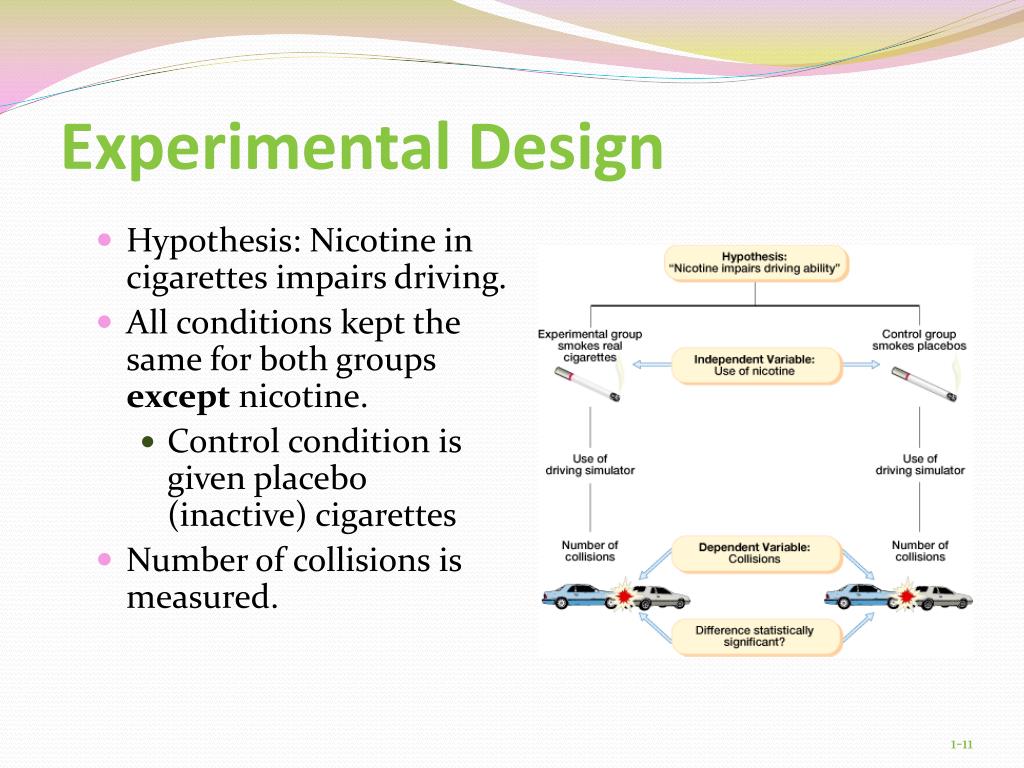
Randomly allocating participants to independent variable conditions means that all participants should have an equal chance of taking part in each condition. The key difference between observational studies and experiments is that, done correctly, an observational study will never influence the responses or behaviours of participants. Experimental designs will have a treatment condition applied to at least a portion of participants. Within-subjects or repeated measures can also refer to an experimental design where an effect emerges over time, and individual responses are measured over time in order to measure this effect as it emerges.

Research Methods in Psychology
Challenging current scientific practice: how a shift in research methodology could reduce animal use Lab Animal - Nature.com
Challenging current scientific practice: how a shift in research methodology could reduce animal use Lab Animal.
Posted: Wed, 03 Jan 2024 08:00:00 GMT [source]
Thus any difference between the conditions in terms of the dependent variable could be caused by the order of the conditions and not the independent variable itself. Independent measures design, also known as between-groups, is an experimental design where different participants are used in each condition of the independent variable. This means that each condition of the experiment includes a different group of participants. Main concerns in experimental design include the establishment of validity, reliability, and replicability.
Data Availability Statement
This may happen in particular circumstances, like in the presence of a magnetic field. "It is the spirit of variable design and flexibility that drove us to create FS Industrie," he adds. "A response to the changing nature of type, for brands that are responding to the changing nature of work." Handing over this degree of control of the identity to the client may seem unusual.
Covariate Adaptive Randomization
If the researcher is testing a new therapy for individuals with binge eating disorder, their dependent variable may be the number of binge eating episodes a participant reports. The researcher likely expects her intervention to decrease the number of binge eating episodes reported by participants. Thus, she must, at a minimum, measure the number of episodes that occur after the intervention, which is the post-test. In a classic experimental design, participants are also given a pretest to measure the dependent variable before the experimental treatment begins.
Explanatory Research – Types, Methods, Guide
All variables which are not independent variables but could affect the results (DV) of the experiment. In a within-subjects design (also known as a repeated measures design), every individual receives each of the experimental treatments consecutively, and their responses to each treatment are measured. In a between-subjects design (also known as an independent measures design or classic ANOVA design), individuals receive only one of the possible levels of an experimental treatment. You manipulate one or more independent variables and measure their effect on one or more dependent variables. Remember also that using one type of design does not preclude using the other type in a different study.
It is essential in a between-subjects experiment that the researcher assigns participants to conditions so that the different groups are, on average, highly similar to each other. This matching is a matter of controlling these extraneous participant variables across conditions so that they do not become confounding variables. The purpose of experimental design is to control and manipulate one or more independent variables to determine their effect on a dependent variable. Experimental design allows researchers to systematically investigate causal relationships between variables, and to establish cause-and-effect relationships between the independent and dependent variables.
However, not all experiments can use a within-subjects design nor would it be desirable to do so. If a within-subjects design would be difficult or impossible to carry out, then you should consider a between-subjects design instead. Or imagine you were trying to reduce people’s level of prejudice by having them interact with someone of another race. A within-subjects design with counterbalancing would require testing some participants in the treatment condition first and then in a control condition. But if the treatment works and reduces people’s level of prejudice, then they would no longer be suitable for testing in the control condition.
Step 5: Plan how to measure your dependent variable
The principle of random allocation is to avoid bias in how the experiment is carried out and limit the effects of participant variables. The variable the experimenter manipulates (i.e., changes) is assumed to have a direct effect on the dependent variable. In medical or social research, you might also use matched pairs within your between-subjects design to make sure that each treatment group contains the same variety of test subjects in the same proportions. How you apply your experimental treatments to your test subjects is crucial for obtaining valid and reliable results.
The Definition of Random Assignment In Psychology - Verywell Mind
The Definition of Random Assignment In Psychology.
Posted: Fri, 03 Nov 2023 07:00:00 GMT [source]
Fast forward to the Renaissance (14th to 17th centuries), a time of big changes and lots of curiosity. People like Galileo started to experiment by actually doing tests, like rolling balls down inclined planes to study motion. He'd have an idea, test it, look at the results, and then think some more. This approach was a lot more reliable than just sitting around and thinking.
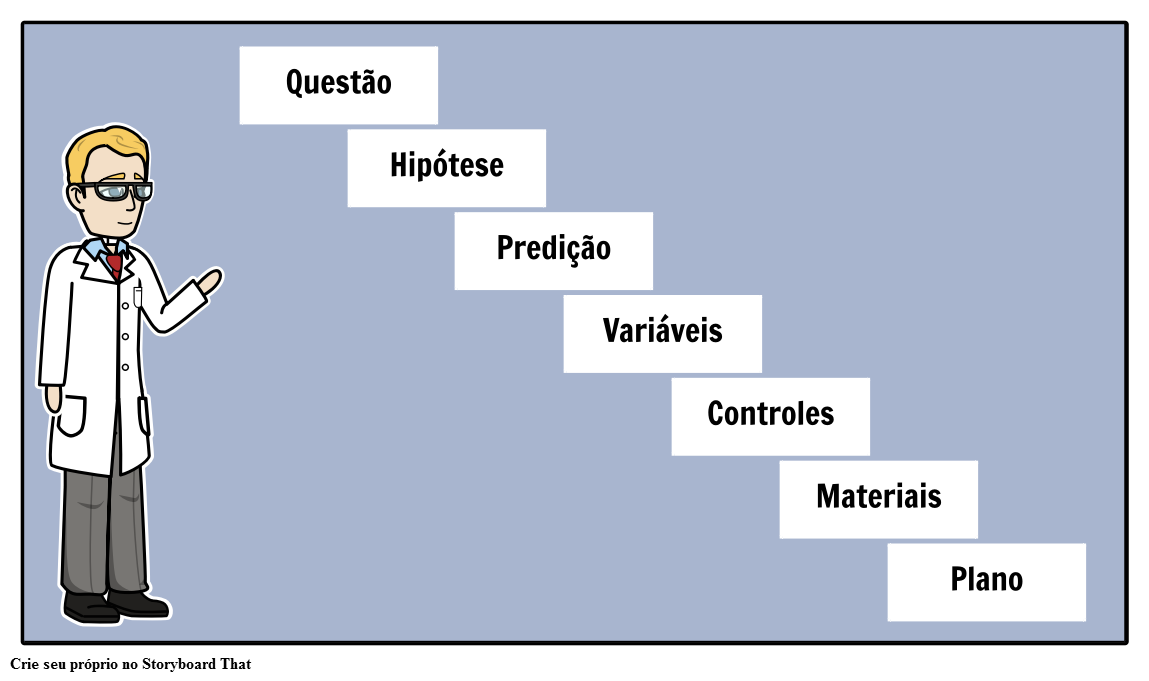
You can measure some data with scientific tools, while you’ll need to operationalize other forms to turn them into measurable observations. Depending on your experiment, your variable may be a fixed stimulus (like a medical treatment) or a variable stimulus (like a period during which an activity occurs). Your hypothesis should provide a prediction of the answer to your research question. Others, like Sequential Design, are flexible and adaptable, making quick changes based on what they learn. And let's not forget the adventurous Field Experiments, which take us out of the lab and into the real world to discover things we might not see otherwise.
They couldn't say smoking caused cancer—that would require a true experiment—but the strong correlation was a red flag that led to more research and eventually, health warnings. Factorial designs are widely used in psychology to untangle the web of factors that influence human behavior. They're also popular in fields like marketing, where companies want to understand how different aspects like price, packaging, and advertising influence a product's success. Factorial Design became the talk of the town with the rise of computers.
Next, let's dive into Bayesian Designs, the data detectives of the research universe. Named after Thomas Bayes, an 18th-century statistician and minister, this design doesn't just look at what's happening now; it also takes into account what's happened before. Now, let's talk about Adaptive Designs, the chameleons of the experimental world. One famous use of Pretest-Posttest Design is in evaluating the effectiveness of driver's education courses. Researchers will measure people's driving skills before and after the course to see if they've improved.




No comments:
Post a Comment